

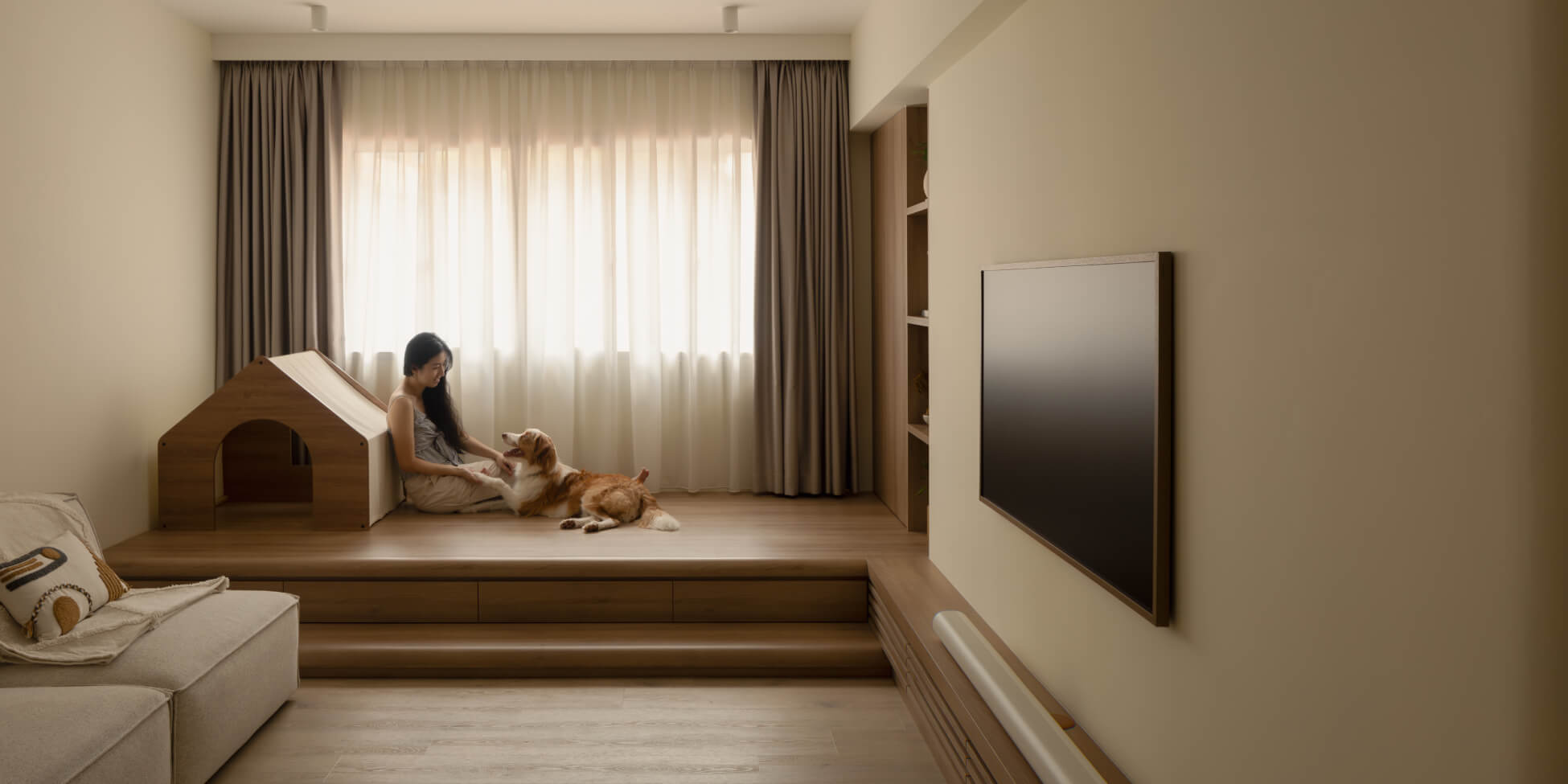
Pets don't simply occupy a home. They move through it, sleep in it, shed in it, play in it and build their own routines within it.
That means good pet friendly interior design goes beyond choosing a washable sofa or hiding a litter box. If you're renovating, it's worth thinking about your pet's habits from the beginning, so layout, materials, storage and fittings can work for both humans and animals. For homeowners renovating with pets in Singapore, these decisions are far easier to build in from the start than to retrofit later.
1. Start With Your Pet's Everyday Routine
Before you decide what makes a home "pet-friendly," look at how your pet actually uses the space.
Ask yourself:
- Where and how do they sleep?
- Where are they fed?
- Where do they toilet?
- Do they spend most of their time indoors or outdoors?
- Do they climb, scratch or chew?
- Do they need to be separated from certain rooms?
- Where do you wash or groom them?
- Where do you store leads, food, toys and cleaning supplies?
A thoughtful pet friendly reno starts with real behaviours, not generic pet features borrowed from a checklist.
2. Choose Flooring That Can Handle Everyday Pet Life
Flooring ranks among the biggest decisions in a pet-friendly home. Weigh up:
- Scratch resistance
- Water resistance
- Ease of cleaning
- Slip resistance
- How visible fur and dirt will be
- Comfort underfoot for older pets
Hard-wearing tiles, vinyl and certain engineered surfaces tend to hold up better than more delicate finishes. For dogs especially, overly slippery flooring can become uncomfortable over time, particularly as they age.
3. Think Carefully About Fabrics, Carpentry and Finishes
Pets interact with surfaces very differently from people, so each material deserves a second look.
- Upholstery: Choose tightly woven fabrics, easy-clean materials, removable covers, and colours or textures that don't highlight every strand of fur.
- Carpentry: Favour scratch-resistant laminates, durable cabinet edges and enclosed storage, and keep fragile finishes away from paw or nose height.
- Walls: Washable paints make cleaning up marks, fur and the occasional muddy paw much simpler.
Being pet-friendly doesn't have to mean having to sacrifice a refined interior. It just means choosing finishes that can take a bit more wear.
4. Plan Dedicated Pet Zones Into the Layout
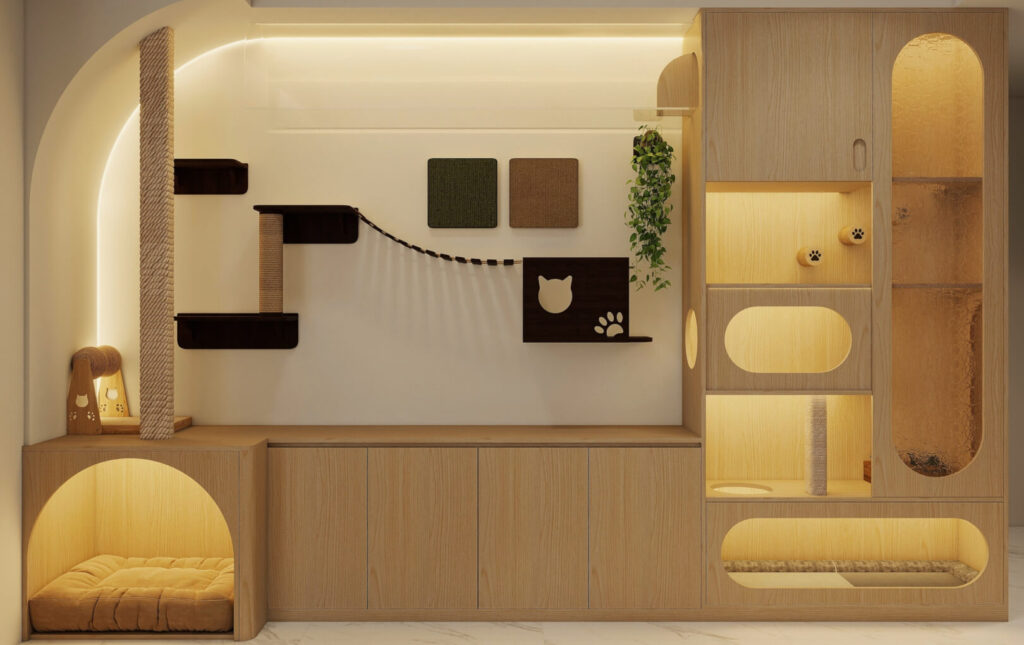
One of the most useful pet friendly interior design moves is simply giving pet-related activities a proper place, rather than letting them spread across the house.
Depending on your home and pet, this could include:
- A built-in feeding station
- A discreet litter area
- A pet bed integrated into carpentry
- A grooming or washing corner
- A storage cabinet for food, treats and medication
- A designated area near the entrance for leashes and towels
Planned zones keep pet items contained and make the whole space feel more organised.
5. Make Cleaning Easier From Day One
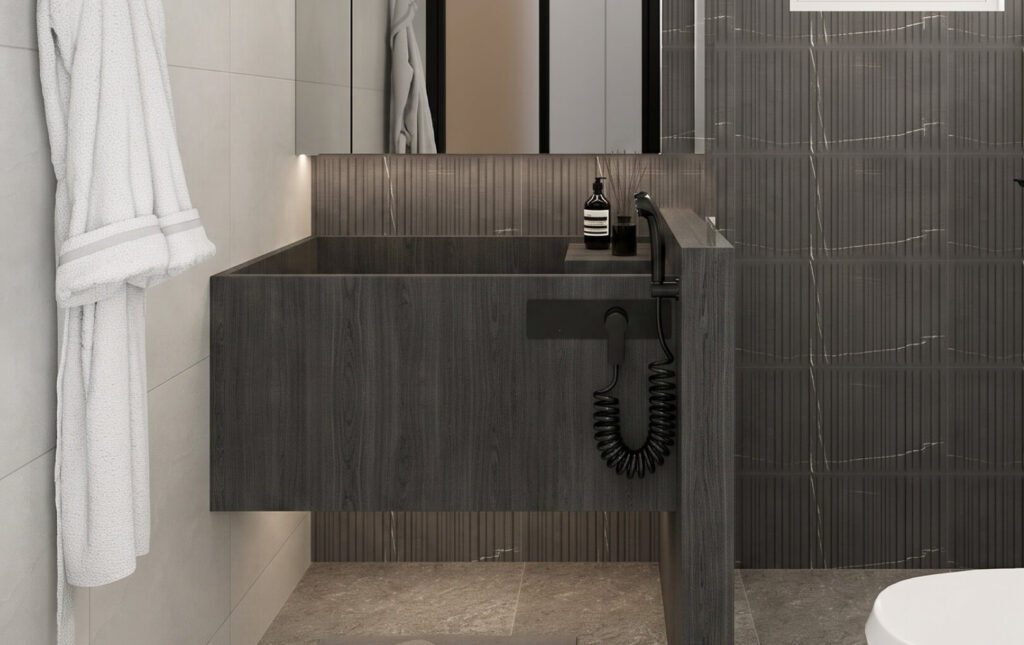
Anyone renovating with pets in Singapore should think about maintenance before choosing finishes. The local humid climate can amplify issues like pet odours, damp bedding and fur accumulation, so it pays to plan ahead.
Build in:
- Easy-to-mop surfaces
- Fewer difficult-to-clean gaps
- Proper ventilation around litter or pet areas
- Storage for vacuums and cleaning tools
- Easily-washable soft furnishings
- Convenient access to a sink or washing area
- Utilities customed to owners' heights for ease of long-term use
A home that's easy to maintain tends to stay looking better for longer, especially with pets in the mix.
6. Build Safety Into the Design
A beautiful home can still hide plenty of hazards for pets. Watch for:
- Secure windows and balconies
- Pet-safe balcony screens
- Concealed electrical cables
- Secure rubbish bins
- Cabinets for cleaning chemicals
- Sharp corners at pet height
- Fragile objects near climbing routes
- Pet-safe plant choices
For cats, vertical movement matters too. Shelving, window ledges and furniture placement can unintentionally create escape routes or unsafe jumps, so it's worth mapping those pathways during planning rather than after the fact.
7. Consider Movement, Boundaries and Access
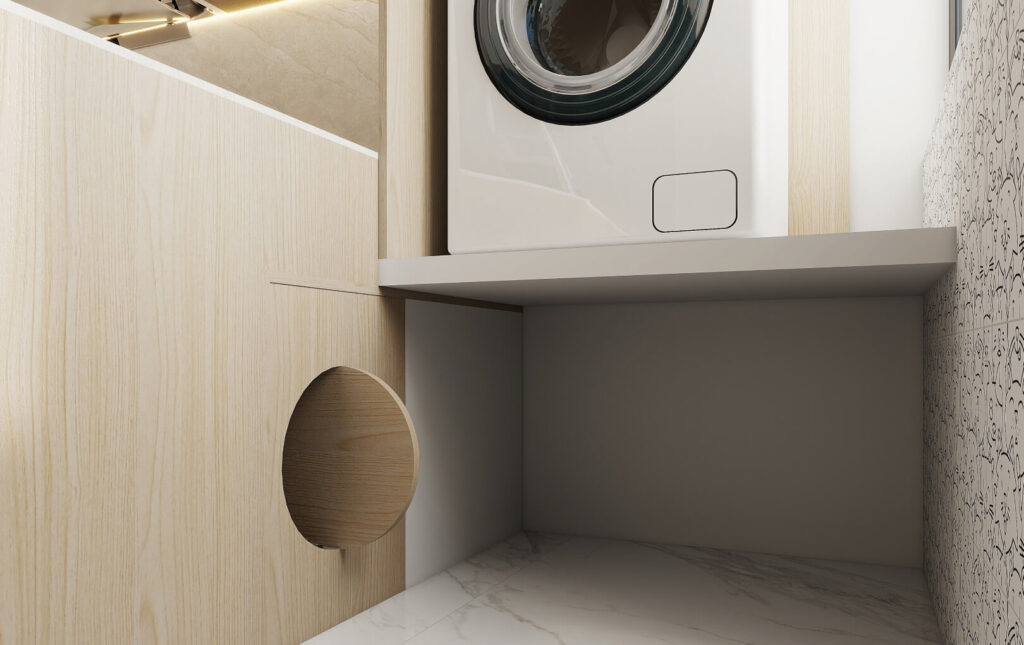
Not every pet needs access to every room. As you plan your pet friendly reno, think about how you might control movement through the home.
Options include:
- Integrated pet gates
- Sliding doors
- Cat doors
- Pet-access openings built into cabinetry
- Zoning sleeping and feeding areas
- Creating separation when guests visit
The goal isn't to restrict pets. It's to give homeowners more control over how spaces get shared.
8. Design for Your Pet as They Age
Pet-friendly design shouldn't only accommodate puppies and kittens. Older pets may eventually need:
- Easier access to beds or sofas
- Less slippery flooring
- Fewer steps
- Lower feeding stations
- More accessible sleeping areas
- Easier routes to outdoor or toilet areas
Building some flexibility into your renovation helps your home keep working as your pet's needs change with age.
9. Don't Let "Pet-Friendly" Take Over the Design
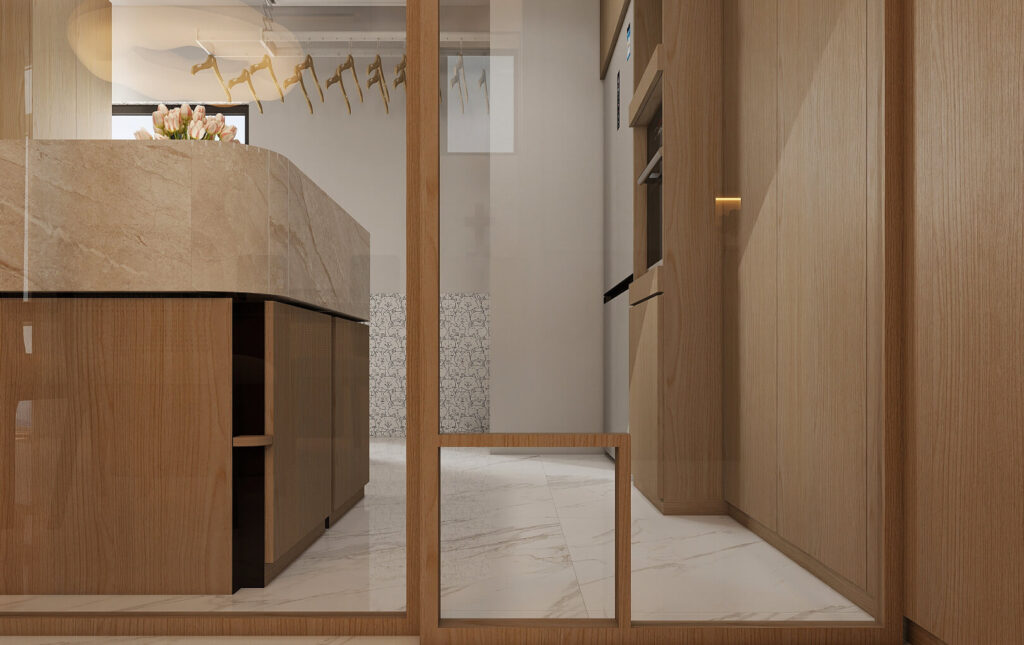
All considered, a pet-friendly home should still feel like your home. The best pet friendly interior design Singapore solutions tend to sit quietly inside the overall scheme: a feeding area built neatly into cabinetry, discreet storage near the entrance, or a cat perch that doubles as part of the shelving design.
The goal isn't to make a home look designed for pets. It's to make it work effortlessly for everyone living in it, two legs or four.
It's More Than Just Design.
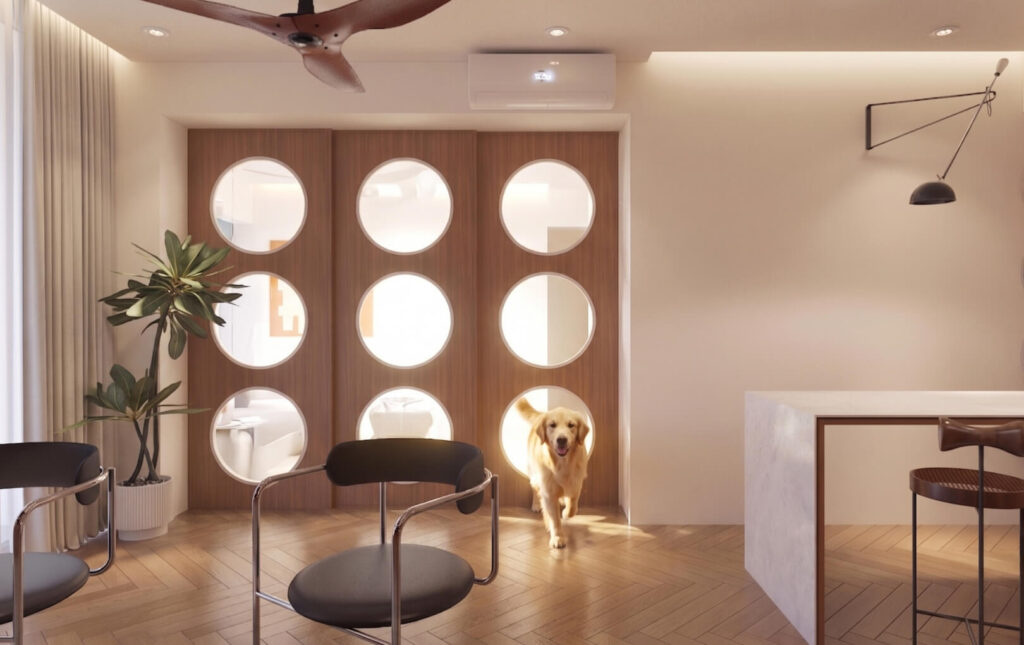
A successful pet-friendly reno involves more than bolting on a few pet-specific features after the layout is finalised. Material choices, ventilation, carpentry detailing, safety, cleaning requirements and circulation all shape how comfortable and practical the finished home feels.
This is where an experienced renovation partner makes a real difference. At Homescape, we start by understanding your household's routines before we design the space, then recommend practical, durable materials suited to real daily use.
We can advise how to integrate pet-friendly features seamlessly into the overall design, balance everyday maintenance with aesthetics, and plan spaces that can adapt as both your household and your pets change over time.
Pets are part of the family after all, so their needs deserve a place in the renovation conversation too. With thoughtful planning from the start, your home can be easier to maintain, safer for your pets, and beautifully designed for everyone who shares it with them.